
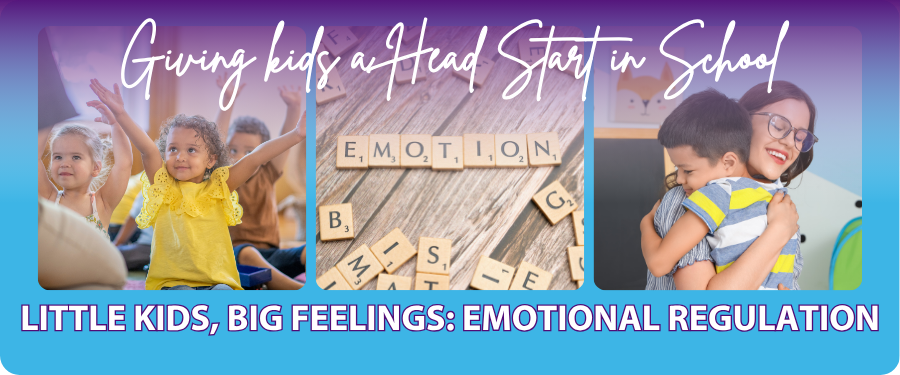
07 Oct Little Kids, Big Feelings: Emotional Regulation
When Big Feelings Take Over
I recently watched a three-year-old completely fall apart at a playground when it was time to leave. It’s a familiar scene for any parent or teacher: the screaming, the tears, and the realization that a young child’s emotional regulation system is still very much under construction.
His mother had given the five-minute warning. Then the two-minute warning. But when she finally said, “It’s time to go,” he crumpled. He screamed, cried, and eventually plowed his forehead into the sand.
His mother tried everything.
“Let’s stop for a snack on the way home.”
“We can come back another day.”
“Look at that big truck over there!”
Nothing worked.
In fact, every attempt to distract him seemed to make him even more upset.
If you’ve ever experienced a moment like this with a child, you know how frustrating it can be. Logic doesn’t work. Redirection doesn’t work. Even your best parenting tools can seem completely ineffective.
Why?
Because when a young child’s nervous system is flooded, their brain is essentially offline.
Head Start Awareness Month and School Readiness
As we observe National Head Start Awareness Month, it’s worth expanding how we define school readiness.
Parents and educators often focus on academic skills such as recognizing letters, counting to twenty, identifying colors, or writing a child’s name. Those skills are certainly important.
But true school readiness begins much deeper.
A child who can handle disappointment, recover from frustration, transition between activities, cooperate with others, and regulate big emotions has developed critical skills that support success in school and beyond.
When a child reaches emotional overload, the prefrontal cortex, the part of the brain responsible for reasoning, problem-solving, self-control, and decision-making, temporarily goes offline. The emotional centers of the brain take over.
In that state, trying to reason with a child or talk them through their behavior is like trying to whisper instructions to someone standing next to a jet engine.
They simply can’t process what you’re saying.
Brain Science Made Simple
Understanding what’s happening beneath the surface can help us respond more effectively.
The Survival Brain Takes Over
When stress, frustration, disappointment, or sensory overload reaches a tipping point, the brain’s alarm system activates.
The child enters a fight, flight, or freeze response designed to help them deal with what their brain perceives as a threat.
For adults, leaving the playground may seem like a minor inconvenience.
For a child, it can feel like a genuine crisis.
Logic Gets Locked Out
Once the child’s emotional alarm system takes over, higher-level thinking becomes far less accessible.
This means the child may struggle to:
- Listen to directions
- Consider consequences
- Solve problems
- Express feelings clearly
- Accept logical explanations
They’re not being manipulative.
They’re overwhelmed.
Behavior Is Communication
A meltdown is not usually a sign that a child is trying to control the situation.
More often, it is a neurological SOS.
The behavior is communicating:
“I have reached my limit.”
“This feels too big for me to handle.”
“I need help regulating.”
When we understand behavior this way, we can respond with greater empathy and effectiveness.
The Myth of Distraction
Many adults instinctively try to distract an upset child.
“Look over there!”
“Want a cookie?”
“Let’s go do something fun!”
Distraction isn’t a bad parenting tool. In fact, it can work beautifully when a child is mildly frustrated, bored, or transitioning between activities.
If a child’s nervous system is calm and their thinking brain is online, redirection can help them shift their attention and move forward.
The problem occurs when we use distraction during a full-blown emotional flood.
When a child is trapped in a cycle of panic, anger, or intense frustration, their brain cannot easily make that shift.
What feels like a helpful distraction to the adult can feel dismissive to the child.
The unintended message becomes:
“Your feelings don’t matter.”
This often increases distress rather than reducing it.
Before children can move on, they often need help moving through their feelings first.
Co-Regulation: The Foundation of Emotional Regulation
Before children can learn self-regulation, they must experience co-regulation.
Co-regulation happens when a calm adult acts as an external anchor for an overwhelmed nervous system.
Rather than trying to fix the emotions, the adult focuses on creating safety.
Hold Safe Space
Stay nearby.
Lower yourself to the child’s level if appropriate.
Provide a sense of security without hovering or crowding them.
Stay Calm and Reduce Stimuli
Resist the urge to lecture, interrogate, or repeatedly explain.
When emotions are running high, less talking is often more effective.
A calm presence can communicate safety far better than a lengthy explanation.
Offer Physical Presence
If welcomed, a gentle touch, hug, or simply sitting nearby can help a child feel secure.
Your calm nervous system helps their nervous system begin to settle.
Only after the emotional storm passes does the brain become available for learning, reflection, and problem-solving.
Why This Matters for Lifelong Success
Emotional regulation affects far more than behavior.
It influences:
- Classroom learning
- Peer relationships
- Problem-solving skills
- Resilience
- Confidence
- Mental health
Children are not born knowing how to manage frustration, disappointment, anger, or anxiety.
They learn those skills through repeated experiences with caring adults who help them navigate big feelings safely.
Every meltdown becomes an opportunity to build the emotional foundation that supports future success.
Building Emotional Readiness
As we celebrate National Head Start Awareness Month, let’s remember that preparing children for school is about more than academics.
School readiness begins with emotional readiness.
It grows through relationships.
It develops through connection, support, and practice.
Because before children are ready to learn, they need to feel safe enough to think.
And sometimes that journey begins with a calm adult sitting quietly beside a child at the playground, waiting for the storm to pass.
Explore First Five Years (FFY)
Helping young children develop emotional regulation is one of the most important investments we can make in their future.
First Five Years (FFY) equips parent educators, early childhood professionals, and community organizations with practical, research-based strategies for helping families build social-emotional skills, strengthen relationships, and prepare children for success in school and life.
Leaders:
- Explore our First Five Years (FFY) curriculum
- Register for an upcoming First Five Years Leader Training Workshop (Live Webinars or Self-paced Online Training)
- Get access to Free resources that help parents support emotional readiness, resilience, and healthy development by signing up for the Leader Connection (only 3 emails per month).
Parents:
Explore First Five Years in-person or online classes in your community and find helpful tips in our blog.