
16 Jun The Crucial Role of Fathers
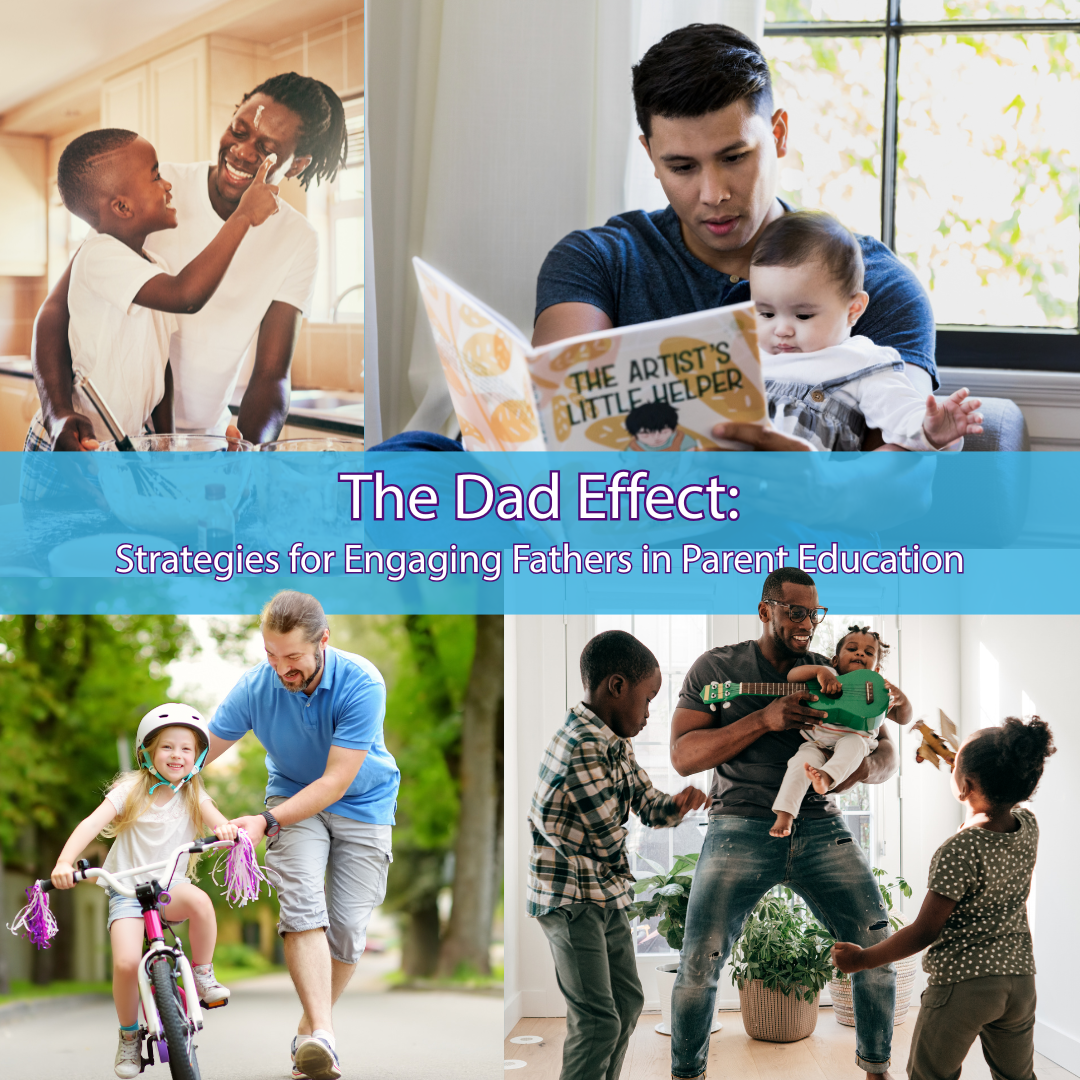
The Dad Effect: Strategies for Engaging Fathers in Parent Education
Fathers play a vital—and often underutilized—role in the development of children. At Active Parenting, we recognize that when fathers are actively engaged, children experience stronger emotional, social, and cognitive outcomes. Yet many parent education programs still struggle to fully engage dads. Historically, parenting resources and education programs have heavily trended toward mothers. But the times have changed, and so must our approach to parent education.
This Father’s Day, we’re exploring “The Dad Effect” and sharing evidence-based fatherhood strategies to better support and include fathers in parenting programs.
Updated June 2026
Active Parenting celebrates the evolving role of fathers in today’s families.
Modern dads are more engaged than ever—showing up not only for milestones but in everyday moments: reading bedtime stories, attending school events, coaching teams, and building meaningful emotional connections with their children.
At Active Parenting, we intentionally design programs to support all caregivers. While our language is inclusive, our approach is grounded in evidence-based strategies that resonate with fathers, empowering them with tools for communication, encouragement, nonviolent discipline, and problem-solving.
These principles are especially valuable for fathers navigating co-parenting, stepfamilies, or raising teens—or for those who may not have had strong parenting models themselves.
The Profound Impact of an Involved Dad
Research consistently highlights the immense positive influence fathers have on their children’s lives, from infancy through adulthood. When dads are actively engaged and supportive, children tend to exhibit:
- Better Social Skills and Emotional Well-being: Involved fathers contribute to increased sociability, confidence, and self-control, and a reduced likelihood of depression or disruptive behaviors. Longitudinal data shows that a father’s early emotional closeness protects against depression and correlates with higher marital satisfaction well into the child’s adult years.
- Improved Academic Performance: Children with actively engaged fathers are significantly more likely to achieve higher grades and pursue higher education. A father’s active interest in his child’s education by age 11 has been shown to have a greater statistical influence on educational success than family background, the child’s personality, or poverty levels.
- Greater Resilience and Fewer Behavioral Problems: Dads play a vital role in instilling perseverance and helping children overcome setbacks. Kids with involved fathers are also less prone to substance abuse or risky behaviors. For instance, “The role of father involvement in children’s later mental health” study by Flouri and Buchanan shows that 35% of boys with low paternal involvement become youth offenders, compared to just 18% of boys who have a highly involved father figure in their lives.
- Strong Role Models: Fathers teach invaluable lessons like responsibility, accountability, empathy, delayed gratification, and compassion through their actions and commitment. They model traits like grit, toughness, patience, and determination.
- Child Welfare & Foster Retention: In child welfare case planning, involving a legally identified father directly correlates with a significant increase in time spent with a biological parent, drastically reducing out-of-home substitute foster care utilization.
One powerful example of the Dad Effect is father-led “rough-and-tumble” play. When done safely and with attunement, this type of play helps children learn to manage high-energy emotions, regulate impulses, and recover from frustration—key life skills grounded in evidence-based fatherhood strategies.
It’s not just about the amount of time spent, but the quality of the relationship and the parenting style. Authoritative parenting, characterized by love and clear boundaries, leads to superior outcomes across the board. This aligns perfectly with the core principles taught in all Active Parenting programs.
Barriers to Father Participation
Despite the clear benefits of father involvement, many programs see low participation from dads. Common barriers include:
- Work schedules and time constraints
- Programs perceived as “mom-focused”
- Childcare Cost—if both parents attend a course they’ll need to pay for a babysitter
- The “Stay-at-Home” Default: Because of this childcare cost, many families decide one parent should stay home while the other takes the class. Statistically, dads are often the ones who volunteer to stay behind, unintentionally keeping them out of the parent education loop
- Limited outreach targeting fathers directly
- Social stigma around parenting education or seeking help
- Lack of representation in program materials
Understanding these barriers allows facilitators to intentionally design more inclusive experiences.
Active Parenting for Active Dads
While our programs use inclusive language, their core principles and specific content are incredibly relevant and beneficial for fathers:
- Universal Parenting Skills: Programs like Active Parenting: First Five Years, Active Parenting 4th Edition, and Active Parenting of Teens equip fathers with essential skills in non-violent discipline, effective communication, and encouragement – tools that are foundational for any effective parent.
- Navigating Complex Family Dynamics: Our Cooperative Coparenting and Crossroads of Coparenting courses directly address the importance of both parents, explicitly teaching to “Allow your child to love both parents,” which is crucial for fathers navigating separated or divorced family structures. Similarly, Active Parenting for Stepfamilies is tailored for blended families and directly discusses “Mom and Dad” working together and the “Roles of stepparents,” offering invaluable guidance for male caregivers in these situations.
- Evidence-Based Confidence: All Active Parenting programs are “evidence-based” and “research-tested”. This means that the strategies and skills you learn are rigorously proven to be effective for parents, and by extension, for fathers.
Making Your Classes Dad-Friendly (Checklist)
Use this practical checklist to make your parenting programs more welcoming and engaging for fathers:
Language & Communication
☐ Use inclusive language such as “parents” or “caregivers”
☐ Avoid defaulting to mom-centered examples
☐ Include fathers in storytelling and visuals
☐ Demonstrate that parenting takes commitment and leadership
Program Design
☐ Offer flexible scheduling (evenings/weekends)
☐ Include hands-on and practical learning activities
☐ Use real-world scenarios fathers relate to
☐ Offer on-site childcare, hybrid options, or partner-discounts so both parents can attend.
Engagement Strategies
☐ Actively invite fathers into discussions
☐ Normalize diverse parenting styles
☐ Create space for shared experiences
Co-Parenting Support
☐ Encourage collaboration between caregivers
☐ Provide tools for shared decision-making
☐ Reinforce consistency in parenting approaches
Supporting Dad Mental Health
An engaged father is more likely to stay involved when supported emotionally. Facilitators can play a key role by normalizing conversations around father well-being.
Encourage fathers to:
- Build support networks
- Recognize stress and burnout
- Focus on connection over perfection
- Practice self-care without guilt or embarrassment
Integrating these elements strengthens both father engagement and overall family outcomes. Parent educators can easily weave well-being check-ins into their curriculum by reminding fathers that self-care is a foundational component of effective parenting. Normalizing the stresses of work-life balance and giving men an open, judgment-free space to discuss their challenges reduces parental burnout and builds a stronger, safer family core.
🎥 The Dad Effect in Action
The true impact of inclusive parent education is best measured in changed lives. Watch the powerful video below featuring Active Parenting leader Christopher Padilla as he shares a moving story of a father navigating hurdles to successfully reunite and reconnect with his daughter:
WATCH NOW: Rebuilding Connection: A Father’s Journey to Reunification
Stories like this remind us that it’s never too late to rebuild connection—and that fathers have a lifelong impact on their children.
🎁 Free Resources for Your Families and Programs
In honor of Father’s Day, we want to equip your community with the tools they need to succeed. Download our free resources below:
-
For Parents & Caregivers: Download our free Connection Toolkit. It includes family conversation starters and activities designed to strengthen the bond between parents and their children. 👉Connection Toolkit PDF (No opt-in required—truly free resource)
-
For Leaders & Facilitators (Coming June 30th): We are putting the finishing touches on our comprehensive Turnout Toolkit, packed with specialized recruitment and retention strategies for moms and dads alike. Don’t let empty seats stand between you and a stronger community. 👉 Click here to join the Leader Connection and be the first to get access the moment it drops!
Sources and More Resources:
- The Importance of Fathers for Child Development: How fathers contribute to children’s well-being by Jennifer E. Lansford, Ph.D. with Psychology Today
- The Changing Role of the Modern Day Father from the American Psychological Association
- Long-Term Effects of Father Involvement in Childhood on Their Son’s Physiological Stress Regulation System in Adulthood from the National Library of Medicine
- The Causal Effects of Father Absence from the National Library of Medicine
- Flouri, E. and Buchanan, A. (2003) ‘The role of father involvement in children’s later mental health.’ Cited in Children in Scotland, 2008 Making The Gender Equality Duty Real for children, young people and their fathers

Active Parenting Publishers has been providing research-based education programs with an emphasis on nonviolent discipline, mutual respect, and open communication for over 40 years.
STAY IN TOUCH!
Click here to receive the latest news and offers from Active Parenting! And follow us on social media: