
07 May Supporting the Supporters: Building Resilience in Foster Families Through Protective Factors
National Foster Care Month | Mental Health Awareness Month
Every May, we recognize National Foster Care Month, a time to honor the children, families, and professionals who are part of the foster care system. It’s also Mental Health Awareness Month, reminding us that emotional well-being is foundational to healthy families.
At the intersection of these two observances lies an often overlooked truth:
Foster families need more than good intentions to succeed—they need support, structure, and strong parental resilience.
And that’s where parent educators play a critical role.
Understanding the Foster Family Experience
Foster parents step into one of the most challenging and meaningful roles in our communities. They provide stability for children who may have experienced:
- Trauma and loss
- Inconsistent caregiving
- Disrupted attachments
- Emotional and behavioral challenges
While foster parents bring compassion and commitment, the demands of caregiving can be intense. Many face:
- High stress and emotional fatigue
- Uncertainty navigating behaviors and systems
- Feelings of isolation or self-doubt —often reinforced by negative stereotypes portrayed in the media
Supporting foster parents isn’t just helpful—it’s essential for placement stability, child well-being, and long-term positive outcomes.
How Educators Can Help
Parent educators are uniquely positioned to support the supporters. As a leader, you can empower these families by offering programs that are evidence-backed rather than just informational.
Through training, encouragement, and practical tools, educators help foster caregivers move from simply “managing behavior” to building relationships, resilience, and trust.
Here’s how parent educators can make a meaningful impact:
- Normalize challenges and reduce caregiver shame
- Offering strategies grounded in child development and trauma awareness
- Creating space for reflection, connection, and growth
- Reinforce that progress, not perfection, is the goal
- Teach Active Communication skills like active listening and “I-messages”
This month, let’s commit to “supporting the supporters.” When we give foster families the tools to build their own resilience, we aren’t just helping the adults—we are building a safer, more stable world for the children in their care.
In short, parent educators provide something foster families deeply need:
confidence, clarity, and resilience in the midst of complexity.
A Protective Factors Approach
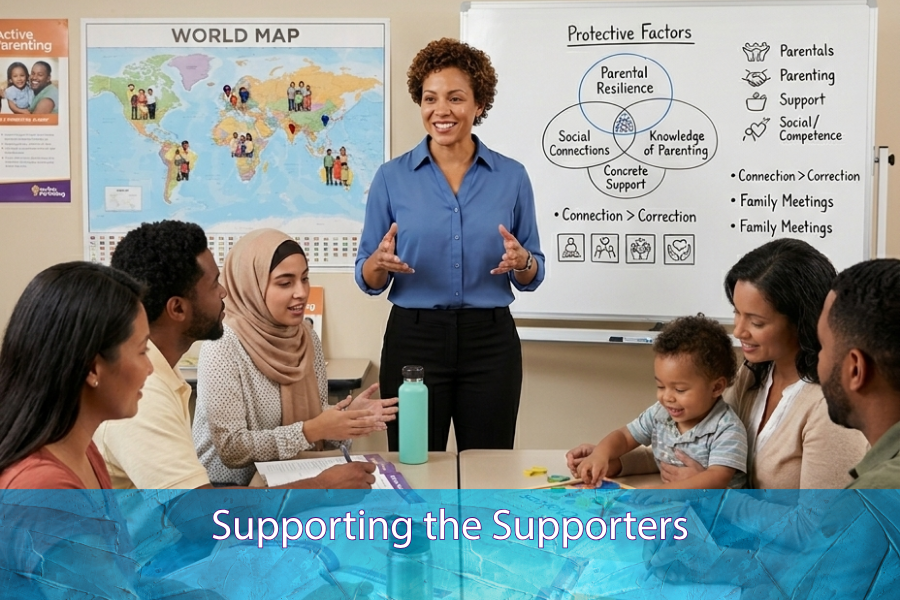
One of the most effective ways to support foster families is through the lens of the Protective Factors Framework, which is woven through our Active Parenting programs. This approach focuses not just on reducing risk, but on building strengths that help families thrive—even during stress.
Here are the five Protective Factors and how parent educators can strengthen them:
-
Parental Resilience
Parental resilience is the ability to manage stress and function well when faced with challenges. For foster families, this resilience is the primary defense against burnout. Foster parents often face emotionally taxing situations. Educators help them:
- Develop realistic expectations
- Practice stress management
- Reframe challenges as opportunities for growth
Key message: You can handle this—and you don’t have to do it alone.
When parent educators strengthen resilience, the impact extends beyond the caregiver to:
- Reduce Placement Instability: Resilient parents can handle behavioral challenges without reaching a breaking point.
- Encourage Healthy Co-Parenting: Many foster situations involve working alongside biological parents. Skills in cooperative communication help maintain focus on the child’s safety and well-being.
- Foster Social Connections: By bringing foster parents into evidence-backed training groups, we provide the social support necessary to reduce the isolation often felt in foster care.
-
Social Connections
Isolation is a common experience for those navigating the child welfare system. Whether they are traditional foster parents or kinship caregivers—grandparents and relatives who have stepped in to provide stability—the feeling of “doing it alone” can lead to burnout.
Educators can:
- Encourage Participation in Support Groups: Foster an environment where kinship and foster families can share their unique experiences.
- Facilitate Peer Discussions: Use class time to bridge the gap between different types of caregivers, showing they share many of the same challenges and successes.
- Help Build Encouragement Networks: Guide families in identifying “safe” social outlets that understand the complexities of their placement.
Key message: Connection reduces stress and strengthens caregiving for every type of family.
-
 Knowledge of Parenting & Child Development
Many foster children have developmental or behavioral responses connected to trauma.
Educators provide:
- Insight into age-appropriate expectations
- Understanding of trauma’s impact on behavior
- Practical, non-violent discipline strategies
Key message: When parents understand the “why,” they can respond more effectively.
-
Concrete Support in Times of Need
From navigating systems to accessing resources, foster parents often need practical help.
Parent educators can:
- Share local and national resources
- Guide problem-solving conversations
- Connect families to tools and services
Key message: Support is available—and asking for it is a strength.
-
Social & Emotional Competence of Children
Helping children regulate emotions and build relationships is central to foster care and lifelong success.
Educators can teach caregivers:
- Emotion coaching techniques
- Positive communication skills
- Ways to build trust and attachment
Key message: Behavior is communication—and connection is the response.
From Managing Behavior to Building Relationships
One of the most important shifts parent educators can encourage is this:
➡️ Moving from control-based discipline
➡️ Toward connection-based guidance
For foster families, this shift is transformative.
Instead of asking:
“Why is this child acting this way?”
Parents begin asking:
“What does this child need right now?”
This mindset:
- Reduces power struggles
- Builds emotional safety
- Strengthens long-term outcomes
And it helps foster parents feel more effective—and less overwhelmed.
Preventing Burnout by Building Confidence
Foster parent burnout is real—and it’s one of the leading causes of placement disruptions.
Parent education helps prevent burnout by:
- Reinforcing caregiver strengths
- Providing realistic expectations
- Equipping parents with usable tools
- Creating a sense of progress and purpose
When foster parents feel supported, they are more likely to:
- Stay engaged
- Build stronger relationships with children
- Provide consistent, nurturing care
Empowering Through Education
Parent educators don’t just teach skills—they change trajectories.
By equipping foster families with protective factors and practical strategies, they help create:
- More stable placements
- Healthier caregiver-child relationships
- Improved emotional outcomes for children
And perhaps most importantly, they remind foster parents:
“You don’t have to be perfect to make a lasting difference.”
When we support foster parents, we don’t just improve outcomes—
we strengthen communities.
How We Can Support Foster Families—Together
During National Foster Care Month, let’s expand our focus beyond awareness and into action.
If you are a parent educator, consider:
- Integrating Protective Factors into your programs
- Leading trauma-informed parenting classes
- Creating spaces where foster parents feel seen and supported
If you work with families in any capacity:
- Share resources that build confidence and connection
- Encourage participation in parent education programs
- Recognize and uplift the work foster families are doing
Moving Forward
Foster families open their homes—and their hearts—every day.
They deserve tools, encouragement, and guidance that helps them succeed.
Parent educators are a vital part of that support system.
When we invest in those who care for children, we strengthen families, communities, and futures.
📋 Bring Trauma-Informed Support to Your Community
Ready to empower the foster, adoptive, and kinship families you serve? Download your Free Resilience Toolkit now to receive your digital copy, complete with practitioner checklists and the ACEs tool.
✅ Explore More
- Learn how Active Parenting programs support foster and kinship caregivers
- Download tools that strengthen Protective Factors in families
- Become a certified Active Parenting Leader through our Leader Training Workshops or a National Trainer of Leaders with the July Training of Trainers
Active Parenting Publishers has been providing research-based education programs with an emphasis on nonviolent discipline, mutual respect, and open communication for over 40 years.
STAY IN TOUCH!
Click here to receive the latest news and offers from Active Parenting! And follow us on social media: